Hydraulic Hose Repair
How Long Do Hydraulic Hoses Last on Heavy Equipment?
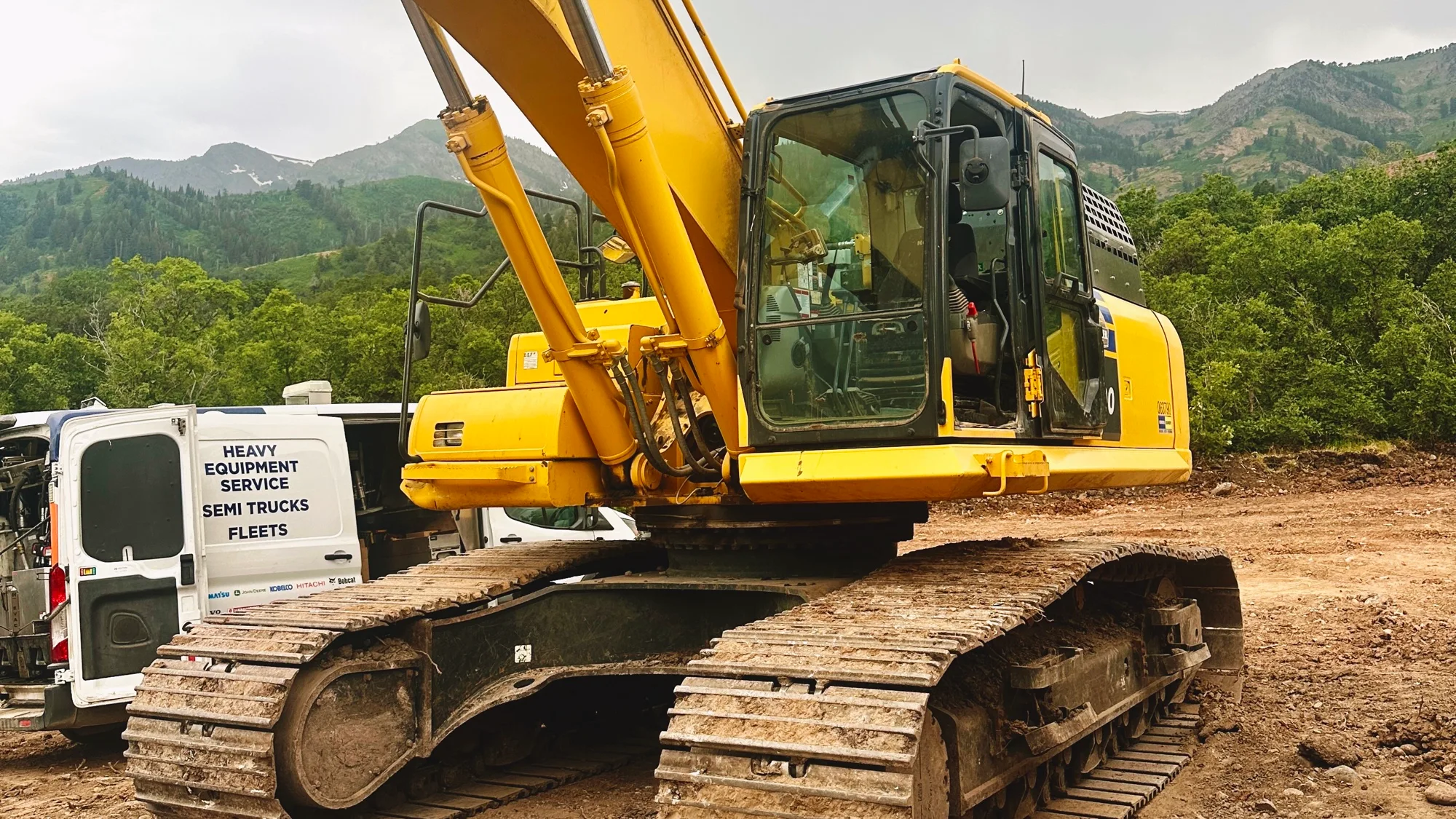
Ask around how long a hydraulic hose should last and you’ll hear everything from “a couple of seasons” to “until it leaks.” The real answer is that no hose comes with a number that tells you when it’s done. Hose engineers say outright that service life can’t be predicted exactly.
What you can do is understand what wears hoses out, know how old the hoses on your machines are, and replace them on a plan instead of in the middle of a shift. Here’s how.
The short answer
- There’s no fixed lifespan. Two identical hoses can last very different lengths of time depending on the machine, the work and how they’re routed.
- Condition comes first. A hose that’s leaking, bulging, kinked, crushed or showing reinforcement wire gets replaced now, no matter how new it is. Here are the 7 signs a hose is about to fail.
- Age still counts. Rubber breaks down over time, even sitting on a shelf, so an old hose can fail with little warning.
- Some manufacturers set a hard limit. A few equipment manuals cap hose life at six years, whatever the hose looks like. If your manual has a limit, follow it.
What wears hydraulic hoses out
Most hoses on heavy equipment don’t die of old age. Something speeds them up:
| What wears the hose | What you’ll see | What helps |
|---|---|---|
| Abrasion | Scuffed, flattened or worn-through cover | Better routing, clamps that hold, sleeves at rub points |
| Heat | Hard, stiff or cracked hose near the exhaust, turbo or a hot system | Routing away from heat, heat sleeves, fixing what runs hot |
| Pressure spikes | Bulges or bursts, often on hammer and attachment lines | A hose rated for the job, checking those lines more often |
| Tight bends and twists | Kinks at the fitting, a lay line that spirals | The right length and bend radius, no twist at install |
| Sun, ozone and weather | Checked or cracked cover | Closer checks on machines parked outside |
| Dirty or wet oil | Inner tube damage you can’t see from outside | Clean, dry oil and filters changed on schedule |
| Wrong hose or fittings | Leaks at the crimp, early failures | The right hose and pressure rating, crimped to spec |
A few of these hit Utah machines especially hard:
- Abrasion is one of the most common causes of hose failure on construction equipment. Dirt work, rock and demolition debris chew through covers fast.
- Temperature swings fatigue the inner tube and the cover. Hot summer afternoons and freezing winter mornings mean hoses expand and contract over and over, and an aging hose is more likely to crack when it’s flexed hard on a cold start.
- Pressure spikes from hydraulic hammers and other attachments send shock loads through the lines, and running a system above its rated pressure does the same. Spikes are hardest on hoses that are already worn.
- Water in the oil can break down the inner tube from the inside, where a walkaround won’t catch it.
How old is that hose? Read the lay line
Most hydraulic hoses have a line of printing along their length, called the lay line. It shows the hose maker, the hose type, the size and the pressure rating, and it includes the date the hose was made, sometimes as a code.
That date matters even before a hose goes on a machine. Under ISO/TS 17165-2, bulk rubber hose has a shelf life of seven years from its manufacture date, or ten years if it’s stored the way ISO 2230 recommends. A finished hose assembly shouldn’t sit in storage more than two years. Older SAE guidance put the shelf life of bulk rubber hose at ten years.
So a “new” spare hose that’s been in the back of the shop for years isn’t really new. Check the date before you put it on.
Some equipment makers go further and cap total hose life. A Doosan excavator manual says, citing European standards, that a hose’s in-service life can never exceed six years, however it looks. Komatsu’s manual for its PC3000 mining shovel sets the same six-year limit and counts storage time toward it. If your machine’s manual sets a limit, follow it.
How to set a hose replacement interval for your fleet
A Parker Hannifin engineer, writing in Machine Design, put it simply: the best guide to how long your hoses will last is how long they’ve lasted before. Base replacement intervals on your own equipment’s history, along with government and industry recommendations. In practice:
- Start with the manual. Use the machine maker’s service schedule and any hose age limit it sets.
- Write down every hose failure. Note the machine, which hose, the hours and the date. After a season or two, you’ll see which hoses fail and roughly when.
- Replace problem hoses ahead of their history. If a boom hose has failed around the same hours twice, replace it before it gets there again.
- Shorten intervals where a failure is dangerous or expensive. Hoses near the operator, near heat, or on the machine the whole job depends on deserve earlier replacement. The same Parker engineer noted that where a failure could be life threatening, even very frequent replacement makes sense.
- Fix repeat failures at the cause. If the same hose keeps failing, look for a rub point, a loose clamp, heat or a routing problem, and fix it when the hose is replaced.
- Keep inspecting between replacements. A quick look on the daily walkaround and a closer check at every scheduled service catch problems early. Here’s what to look for.
A planned hose change beats a blown one
When a hose is replaced on your schedule, the machine is down for the length of the repair. When it blows mid-shift, you also lose the crew’s time, the oil cleanup, and everything else that was waiting on that machine. And when a hose is damaged, it gets a new assembly. Here’s why hoses get replaced, not repaired.
We offer scheduled hose inspections and proactive replacement for fleets, so high-risk hoses get replaced before they fail mid-shift. Our preventive maintenance visits also include a machine inspection, a good time to look over the hoses too.
Mobile hydraulic hose repair in Utah County and Salt Lake County
When a hose is due, or when one lets go, we build and crimp the replacement right at your machine. Our hose truck carries a crimper, common hose sizes and a wide variety of fittings, so there’s no hauling the machine to a shop. Most daytime calls in Utah County and the south end of Salt Lake County are on-site within an hour, and 24/7 emergency service is available for blown hoses.
Find your area: Saratoga Springs, Lehi, Provo, Draper, Salt Lake City and all service areas.
Call or text 801-330-5591, use our contact page, or learn more about our mobile hydraulic hose repair. If a hose has already blown, here’s what to do in the first 10 minutes.
Sources: Ron Mramor (Parker Hannifin), Predicting the life of hydraulic hose, Machine Design; ISO/TS 17165-2 shelf-life guidance as summarized by Fluid Power Journal; How long should a hose last?, Fluid Power World; Know when to replace your hydraulic hoses, Cross Company (SAE shelf life and the lay line date); Doosan DX140R operation and maintenance manual, “12,000 hour / 6 year service” (ManualsLib); Komatsu PC3000-6 operation and maintenance manual (ManualsLib).