
Hydraulic Hose Repair
Hydraulic Hose Blew on the Job? What to Do in the First 10 Minutes
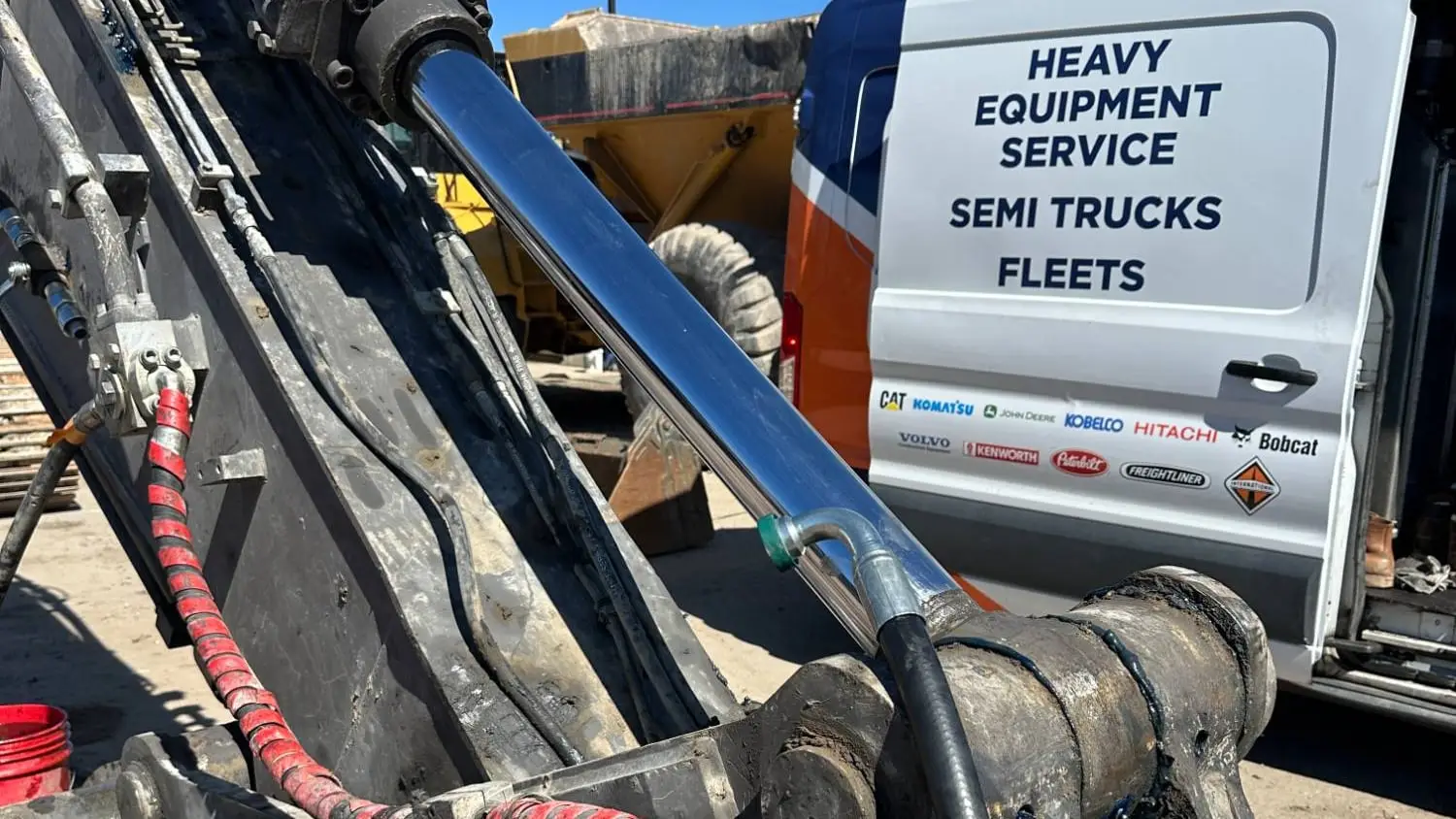
It never happens at a good time. The excavator is mid-trench, the loader is feeding a crusher, or the truck is about to pull out, and a hydraulic hose lets go. Oil sprays, the machine stops doing what it’s told, and the whole crew is suddenly standing around.
What you do in the next ten minutes decides whether this is a quick hose swap or a much bigger problem. Here’s what to do, step by step.
1. Set the work down and shut the machine off
If you can do it safely, lower the bucket, blade, boom and any raised attachment to the ground, then shut the engine off. If you can’t, shut down right away and keep everyone clear of anything that’s raised. Don’t try to finish the pass or “limp it” over to the trailer.
Once the engine is off, follow your operator’s manual to relieve any pressure left in the system. Hydraulic circuits can hold pressure after shutdown, and raised attachments can drop when a line is opened.
Running a machine with a blown hose does more damage than most people expect:
- The pump can run low on oil. Every minute the machine runs, oil leaves the system. A pump that runs short on fluid can be damaged, which turns a hose job into a pump job.
- Oil mist can catch fire. Hydraulic fluid sprayed onto a hot exhaust or turbo can ignite.
- The hose can fail the rest of the way. A hose that’s leaking at a fitting or a split can separate completely and whip.
2. Keep hands and people away from the leak
This is the part people get wrong. Never use your hand to feel for a hydraulic leak, even a small one. A pinhole leak under pressure can push fluid straight through skin. These fluid injection injuries can look like a tiny puncture at first, but they’re serious and need emergency medical care right away. Don’t wait to see how it looks in an hour.
The recommended practices for hydraulic hose assemblies (SAE J1273) are blunt about it: never use any part of your body to check for leaks.
If you want to see where the oil is coming from, wait until the machine is shut down and pressure is relieved, then look for wet spots with a flashlight. Leave pinpointing a leak that only shows under pressure to the tech. Hydraulic oil is also hot when the machine has been working, so give it time to cool and wear gloves and eye protection.
Keep the rest of the crew back from the machine until it’s shut down and the leak has stopped.
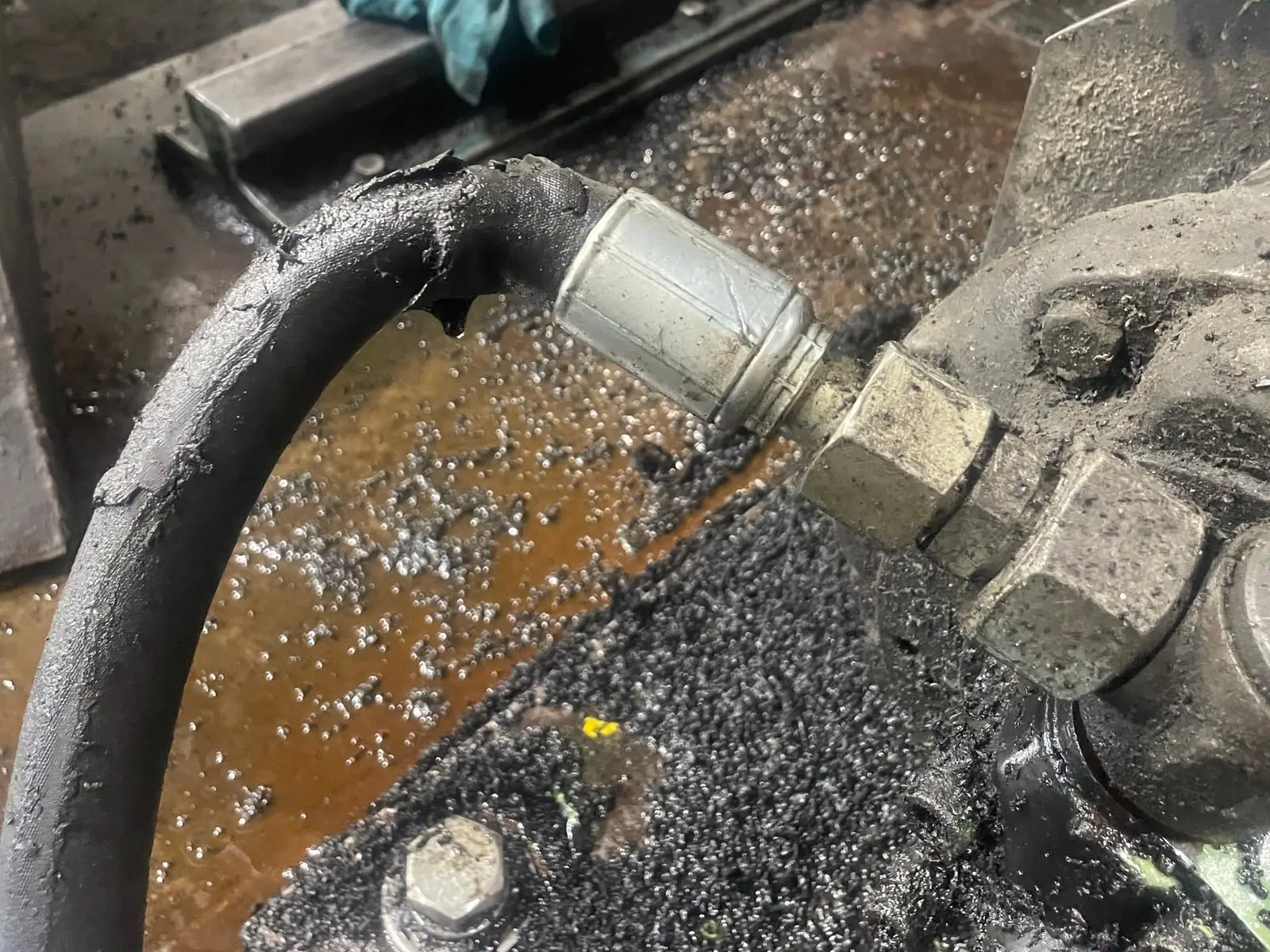
3. Don’t tape it, clamp it, or keep working
It’s tempting to wrap a leak with electrical tape, a hose clamp or a rag so the crew can finish the day. On heavy equipment it doesn’t work, and it puts people at risk.
Hydraulic systems on excavators, loaders and dozers run at pressures tape and band clamps can’t hold. A wrapped leak can turn into a full separation with someone standing right next to it. The only real fix is a new hose assembly, built to the right size and pressure rating and crimped on with the right fittings. More on why hoses get replaced, not repaired.
4. Contain the oil
While you wait, keep the spill from spreading:
- Put absorbent pads, a drain pan or oil-dry under the leak point.
- Keep oil out of storm drains, ditches and standing water.
- Follow your company’s or the jobsite’s spill procedures.
A few minutes here saves a lot of cleanup later, and it keeps the general contractor happy.
5. Text us photos of the hose and the machine
A few photos help us see what we’re dealing with before we get there.
Text 801-330-5591 with:
- Both ends of the failed hose. Get a clear shot of each fitting where it connects to the machine.
- Where the hose runs. Step back and show the route, so we can see the length and any clamps or guards.
- The machine. The make and model, or a photo of the serial plate.
Add a location pin or the cross streets, plus where the machine is parked on the site. On big jobs, “by the north stockpile” saves real time.
If you can see any markings printed on the hose (size, brand, pressure rating), a photo of those helps too. Don’t worry if you can’t. We’ll sort it out when we get there.
6. Make a note of what happened
When the dust settles, jot down what the machine was doing when the hose failed. Was the hose rubbing on something? Was a new attachment hooked up that day? Did it fail in a spot where hoses have failed before?
Hoses that fail in the same place over and over usually point to a routing, clamping or abrasion problem, not just bad luck. Your notes help track down the cause.
What happens when we get there
Our hose truck carries a hose crimper, common hose sizes and a wide variety of fittings, so hoses are built and crimped right at your machine. Here’s how a typical call goes:
- We confirm it’s the hose. We verify the leak is hose-related and pinpoint the exact line.
- We build the new hose on the truck. The new assembly is cut to length and crimped to match, with the right fittings for your machine.
- We install it. The damaged hose comes off and the new one goes on.
- We test it. We run the system to make sure everything is working and the leak is gone before we leave.
No towing, and no waiting on a shop. Most repairs are done in one visit.
How fast we can get to you
We repair hydraulic hoses across Utah County and Salt Lake County, from Lehi and Saratoga Springs to Provo, Spanish Fork, Draper and Bluffdale. Most daytime calls in Utah County and the south end of Salt Lake County are on-site within an hour, and we offer 24/7 emergency hose service, including nights, weekends and holidays.
If a hose just blew on your machine, call or text 801-330-5591, or use our contact page. You’ll reach us directly, not a call center.
See our mobile hydraulic hose repair service for more, or find your city: Lehi, Provo, Draper and all service areas.
Quick checklist
- Set the work down and shut the machine off.
- Relieve pressure per your operator’s manual.
- Never touch or feel for a leak. Fluid injection is a medical emergency.
- Don’t tape it or keep running it.
- Contain the oil.
- Text 801-330-5591 with photos of both hose ends, the hose route, the machine, and a location pin.
Want to catch the next one before it blows? Read 7 signs a hydraulic hose is about to fail.
Sources: SAE J1273, Recommended Practices for Hydraulic Hose Assemblies, as summarized by ANSI; 6 tips for safe and effective hose maintenance (Hose Assembly Tips), which lists the replace-immediately conditions and the never-feel-for-leaks rule.